Generative AI Reshapes the Creative Industry: Opportunities, Challenges, and the Future Landscape
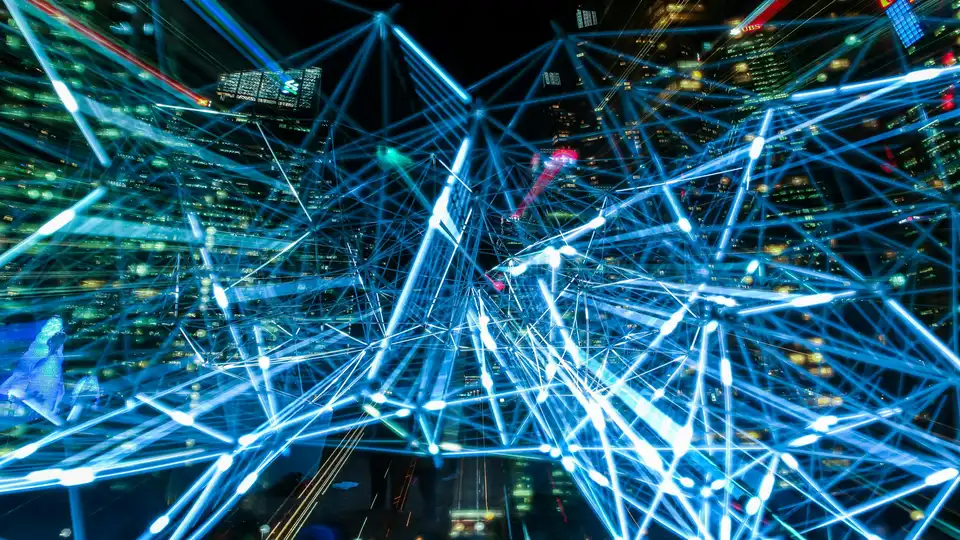
With generative AI technology advancing at warp speed, the global creative industry is undergoing an unprecedented transformation. From designing ads to producing films, from composing music to developing games, AI is rapidly redefining the boundaries and possibilities of creative work. This tech revolution isn't just changing how creative content gets made; it's also reshaping the industry's business models, workflows, and entire value chains.
Where AI Stands in Transforming the Creative Industry Right Now
For a long time, the creative industry was seen as the last bastion of unique human thought and expression, seemingly one of the toughest nuts for technology to crack.1 But then, generative AI burst onto the scene and shattered that perception. Today, AI's role in creative fields has steadily grown from mere auxiliary tools to core productivity drivers, showing truly transformative potential across various sub-sectors.2
Zhang Ming, creative director at a mid-sized design company in Shenzhen, put it plainly: "Three years ago, we were still debating whether AI could even help designers with simple tasks. Now, we're discussing how to completely restructure teams to create the best collaboration model between designers and AI. The speed of change is just incredible."
According to the latest survey from creative industry research firm ArtTech, over 67% of creative companies worldwide have already integrated some form of generative AI tools into their workflows. That's a massive jump from just 23% in 2022. This trend shows varying levels of adoption and application depth across different creative areas.3
Visual Arts and Design
In visual design, generative AI has hit a pretty mature stride. From generating brand logos to churning out ad creatives, from packaging design to UI/UX work, AI tools are quickly becoming standard issue in a designer's daily routine.
Sarah Chen, design director at New York brand strategy company Visionaire, shared a telling example: "Last year, we were designing a seasonal promotion for a multinational retailer. The traditional process would have taken about three weeks to nail down all the design variations. After we brought in Midjourney and DALL-E, we knocked out the same amount of work in just five days, and the creative diversity shot through the roof. Our client satisfaction hit record highs."
Data indicates that generative AI can cut professional design workflow time by an average of 42% while expanding the number of creative solutions by 3 to 5 times compared to old methods. This surge in efficiency is fundamentally altering how design companies price projects and structure their teams.
Music Creation and Production
The AI revolution in music is just as striking. From generating melodies to arranging harmonies, from synthesizing new timbres to mixing and mastering, AI systems are showcasing astonishing capabilities across the entire spectrum of music creation.4
Marcus Williams, a London music producer, observed, "AI can mimic almost any musical style, but what's even more surprising is its ability to craft entirely new combinations of musical elements that human musicians might never think to try. It's opening up a whole new dimension for musical innovation."
A standout case is the album "Synthetic Dreams," created by Seattle independent musician Elena Rodriguez in collaboration with AI. For this album, Rodriguez used AI to generate basic melodies and harmonic frameworks, then personally arranged, performed, and recorded them. The album not only garnered 5 million plays on streaming platforms but also snagged a nomination for an Independent Music Award of the Year. Rodriguez commented, "AI didn't replace my creativity; it just took me to a whole new creative playground, helping me bust out of my musical comfort zone."
Figures show that in the global music market in 2023, at least 12% of newly released music incorporated some form of generative AI technology in its creation. In electronic and experimental music, that proportion climbed to a staggering 37%.
Film and Video Content Production
In film and television, generative AI's application is rapidly expanding from post-production special effects into core creative processes.5 From script generation to character design, from scene construction to motion capture, AI is playing an increasingly pivotal role in filmmaking.6
Veteran Hollywood producer David Morrison recounted, "For the latest season of 'Star Trek,' we used AI to generate initial concept designs for over 200 alien scenes. Our art team then refined them. This didn't just save us millions in upfront design costs; it dramatically accelerated our production schedule."
Independent film director Yuki Tanaka's experience highlights AI's transformative potential for low-budget productions: "My latest short film, 'Fragments of Memory,' was made by a team of just three people, with a huge chunk of the visual effects generated by AI. Five years ago, getting that kind of visual quality would've required at least 15 people and three times the budget."
According to the Global Film and Television Industry Report, roughly 22% of film and TV projects in 2023 used generative AI technology to varying degrees, and that number is projected to surpass 60% by 2026. More importantly, AI is democratizing access to high-quality visual content production, enabling independent creators to achieve visual effects once only possible for big-budget productions.7
Reconstructing the Creative Workflow
Generative AI isn't just changing how and how fast creative content comes out; it's profoundly rebuilding the entire creative workflow and methodology.8 The traditional linear creative process is morphing into something far more iterative, collaborative, and experimental.9
From Linear to Iterative: A New Path for Creative Exploration
Traditional creative processes usually march along a clear, linear path: ideation, sketching, selection, refinement, and delivery. But with AI-assisted creativity, that linear model is getting swapped out for a much more flexible, iterative cycle.
Jean Dupont, strategy director at Parisian advertising agency Créative Moderne, explained, "Now, our creative process feels more like a conversation with AI. We throw out initial ideas, AI spits out multiple possible directions, we pick and tweak certain elements, and then AI gives us new iterations based on that feedback. This back-and-forth creation model has hugely expanded our creative horizons."
This iterative workflow doesn't just boost efficiency; it dramatically increases creative diversity.10 Data from creative management software company Figma shows that design teams using AI-assisted workflows explore an average of 2.7 times more creative directions than traditional processes, all while cutting final delivery time by about 35%.
Human-Machine Collaboration: Redefining Roles
As AI tools become commonplace, the roles of creative professionals are undergoing a fundamental shift. From content producers to creative directors, strategic thinkers, and system designers, this transformation demands that creative workers master a new set of skills.11
Marco Rossi, a professor at the Milan Design Institute, observed, "We're seeing the designer role evolve from 'pixel pusher' to 'prompt engineer' and 'creative strategist.' Technical execution is increasingly handled by AI, freeing humans to focus on concept development, storytelling, and core creative decision-making."
A prime example is how Amsterdam creative agency CLEVER restructured its design team. The company phased out junior designer positions. Instead, they trained all their designers to become "AI collaborative designers," focusing on developing design systems and style guides, then using generative AI tools to rapidly produce content variations that adhere to those guidelines. Lisa Van der Berg, CLEVER's creative director, stated, "Our designers now spend 80% of their time thinking about creative strategies and design systems, rather than doing repetitive production tasks. The result? Higher-quality creative output and a much more satisfied team."
The Dual Path of Creative Democratization and Specialization
The widespread adoption of AI tools is simultaneously driving two seemingly contradictory but actually complementary trends: the democratization of creative capabilities and the deepening of creative specialization.
On one hand, generative AI significantly lowers the technical barriers to creative production. Anyone can now generate professional-grade visual content, music, or copywriting with simple text prompts.12 This democratization offers unprecedented opportunities for small businesses and individual creators.
Li Hua, who runs a small catering brand called "Wei Zhi Yuan" in Shanghai, shared, "Without AI tools, we simply couldn't afford professional brand design and marketing content. Now, I can use Midjourney and Runway to generate high-quality visual content every week, and it's tripled the effectiveness of our social media marketing."
On the other hand, creative professionals are specializing more deeply, honing skills that are tough for AI to replicate: cultural insight, emotional connection, brand strategy, and narrative architecture.
Emma Thompson, chief creative officer at Sydney advertising agency Spark Creative, emphasized, "Generative AI does crank out a lot of content, but truly impactful ideas still require profound human insight and emotional intelligence. We're now more focused on cultivating our team's strategic thinking and cultural sensitivity—those are core competencies that AI simply can't replace."
Industry Reshaping: Business Models and Value Chain Transformation
Generative AI's impact on the creative industry stretches far beyond just the tools; it's actively reshaping the entire industry's business logic and how its value chain is structured.13
Value Redistribution: From Execution to Concept
As AI tools drive down the cost of content production, the creative value chain is undergoing a major reshuffle. Value is migrating from the execution level to the conceptual and strategic levels, directly affecting market pricing structures and profit distribution.
Klaus Schmidt, founder of Berlin digital marketing consulting firm NextGen, explained, "In the past, top-tier creative execution demanded tons of professional skill and time, so it ate up a big chunk of the project budget. Now, execution costs have shrunk dramatically, and the real value is concentrated in strategic guidance, creative concepts, and ensuring brand consistency."
This value shift is forcing creative agencies to rethink how they price their services. Traditional hourly billing models are slowly giving way to value-based pricing. For example, New York brand consulting firm Elevation has completely abandoned hourly billing, opting instead for value pricing tied directly to brand influence and business results.
Creative Asset Commoditization and the Scarcity Paradox
The widespread adoption of generative AI creates a unique market paradox: we're seeing an explosive growth in content production capacity and a simultaneous increase in the scarcity of truly unique creative ideas.
James Wilson, an art market analyst in London, pointed out, "We're witnessing an interesting phenomenon: a flood of AI-generated content is leading to market saturation, but creative works that are genuinely original, culturally deep, and emotionally resonant are becoming even more valuable."
Luxury brand Maison Lumière found an opportunity in this trend. They launched a limited-edition advertising campaign created entirely by hand, explicitly promoting its "zero AI involvement" as a selling point. The campaign garnered exceptionally high engagement rates on social media. Brand manager François Dubois explained, "In an era of rampant generative content, the sheer uniqueness and authenticity of manual creation itself become a luxury."
Re-layering the Creative Market
As generative AI alters the economics of creative production, the market is experiencing a clear layering effect, essentially forming three main tiers:
- Mass-Produced Content Market: This is AI-driven, highly efficient, low-cost, and focuses on standardized creative content. It primarily serves daily marketing needs and small-to-medium businesses.
- Human-Machine Collaborative Mid-Market: Here, creative professionals use AI tools to produce high-quality, customized content. They maintain efficiency while injecting human insight and professional judgment.
- High-End Human-Centric Creative Market: This tier is all about highly original, culturally relevant, and emotionally resonant content created entirely by human creative professionals. It primarily serves high-end brands and the art market.
Adrian Tan, CEO of Singapore digital marketing agency Fusion Digital, observed, "The middle market is expanding, the high-end market is becoming more niche but more profitable, and the low-end market is rapidly being automated by AI tools. This layering is reshaping the employment structure and the scale of businesses across the entire industry."
Creative Ethics and Cultural Impact
The rapid integration of generative AI into the creative field also brings a host of ethical challenges and cultural issues, from intellectual property rights to cultural homogenization, from creative ethics to equitable access to technology.14
Redefining Intellectual Property
Generative AI models are typically trained on vast amounts of existing creative works, which raises profound questions about intellectual property ownership, fair compensation for creators, and what constitutes "fair use."15
Michelle Zhang, a Canadian intellectual property lawyer, stated, "We're in a period where we're redefining the very concept of creative ownership. The legal framework is seriously lagging behind the technological reality. There are no clear answers yet on copyright for AI-generated content, how original creators of source materials should be compensated, or what truly counts as 'transformative' use."
The industry is exploring various solutions, from building licensing markets for AI training content to developing new compensation mechanisms for creators.16 For example, stock photo giant Getty Images has struck deals with several AI companies, allowing its image data to be used for training, but requiring royalties to be paid based on usage.17
Simultaneously, blockchain technology is being explored to create more transparent systems for tracking creative assets.18 Paris startup CreativeChain has developed a blockchain-based platform designed to track how creative works are used by AI systems and ensure original creators get appropriate compensation.
The Risk of Cultural Homogenization
The biases and dominant cultural perspectives embedded in the training data of generative AI systems could lead to a homogenization of creative expression. This poses a potential threat to global cultural diversity.
Dr. Isabella Ramírez, a Mexican cultural researcher, warned, "When creators worldwide use the same AI tools, these tools often reflect Western aesthetic concepts and cultural narratives. This could subtly lead to a global homogenization of creative expression, pushing non-mainstream cultural perspectives to the sidelines."
To counter this, some creative communities are developing more culturally specific AI models. For instance, the Nigerian designer collective AfroCreative has started building AI generation models focused on African aesthetics and narrative traditions, aiming to ensure that digital creative tools reflect a wider array of cultural viewpoints.
New Standards for Transparency and Authenticity
As AI-generated content becomes more pervasive and harder to distinguish from human-made work, the creative industry is re-evaluating the value of transparency and authenticity.
Dr. Andrew Chen, professor of media ethics at Melbourne, pointed out, "We're entering a 'post-truth' creative era where the origin and creation method of content are as important as the content itself. Transparency is quickly becoming a new market value."
Some brands have already started using creative transparency as a differentiator. For example, fashion brand Authentic adopted a detailed "creative provenance label" to clearly indicate the extent and method of AI use in each advertising campaign and product image. The brand reported that this transparency strategy significantly boosted consumer trust and engagement.
Future Outlook: A New Vision of Creative and Technological Dance
Looking ahead, the integration of generative AI and the creative industry will only deepen. However, the direction is likely to focus more on complementarity rather than pure substitution, emphasizing the unique value of humans over mere efficiency.
Collaborative Creativity: Deepening the Human-Machine Creative Partnership
Future creative workflows might look more like a profound collaboration between human creators and AI systems, with each focusing on its unique strengths.
Dr. Sophia Lee, director of creative technology research at Adobe, predicted, "The next generation of creative AI won't just be simple generation tools; they'll be true creative partners that can learn specific creators' styles, values, and aesthetic tendencies, becoming thought partners rather than just execution tools in the creative process."
This collaborative creative model is already in its experimental stages. For example, Amsterdam design studio Future Forms is developing a new type of creative workflow where designers first establish personal "creative profiles." Then, AI assistants don't just perform tasks but also propose creative suggestions and challenges based on the designer's past work and aesthetic preferences.
Transforming Creative Education
As AI tools reshape creative practices, educational institutions are also rethinking how to train the next generation of creative professionals.19 The importance of technical execution skills is relatively diminishing, while conceptual thinking, strategic insight, and interdisciplinary collaboration skills are becoming far more critical.
Dr. Richard Torres, Dean of the Digital Creative Institute at the University of the Arts London, shared, "We are completely restructuring our curriculum. We're cutting down on the focus on specific software tools and beefing up the cultivation of cultural theory, human psychology, and systems thinking. Future creative professionals need to become 'meta-creators'—people who can design creative systems rather than just create individual works."
At the same time, "AI literacy" is becoming a core component of creative education. The Barcelona Design Institute has made "Generative AI Ethics and Applications" a required course for all creative majors, teaching students how to effectively and responsibly collaborate with AI tools.
Redefining Creative Value
As generative AI makes certain forms of creativity more accessible, society may very well re-evaluate the nature and source of creative value.
Cultural critic and philosopher Maria Gonzalez suggested, "When machines can generate an unlimited amount of aesthetic pleasure, pure visual appeal may no longer be the main source of creative value. Instead, emotional resonance, cultural relevance, narrative depth, and conceptual originality may become more important indicators of value."
This shift in value is already evident in the art market. While AI art has captured widespread attention, recent auction data shows that works with deep conceptual foundations and cultural backgrounds continue to fetch higher valuations, regardless of the technical means used to create them.
The Dawn of a New Era of Creativity
The transformation of the creative industry by generative AI is far from complete; in fact, we're really just in the early innings of this tech revolution. From its impact on tools to the restructuring of entire value systems, from reshaping business models to rebuilding ethical frameworks, this shift is unfolding at an unprecedented pace and depth.
Facing this transformation, creative professionals need to embrace the new possibilities technology brings while deeply reflecting on the unique, irreplaceable value of human creativity. With the help of artificial intelligence, the creative industry is poised to enter a new era of vastly unleashed productivity and constantly expanding innovative frontiers.
As Milan designer Paolo Venturi aptly put it, "AI isn't the end of creativity; it's the new starting point for creative exploration. True innovation will come from creators who are both tech-savvy and deeply understand human emotions and culture. We're not competing with machines; we're learning how to dance with new partners."
In this fascinating human-machine dance, the creative industry is welcoming a new era, rich with both opportunities and challenges. Ultimately, a deeper integration of technology and humanities may just lead us to a more vibrant and diverse creative future.