AI Prompt Engineering 2026: The Definitive Guide to Practical Prompting (Beginner to Advanced)

Stop letting generative AI tools produce sloppy or irrelevant results. Whether you're using ChatGPT for focused content creation, Claude for deep data analysis, or Midjourney for generating high-resolution images, AI prompts act as a "bridge" to effective communication with artificial intelligence. Mastering how to write high-quality AI prompts is an essential skill—because the quality of your prompts directly determines the quality of the output.
The upper limit of AI capabilities largely depends on our skill level and the quality of the AI prompts we use.
Mastering AI prompt writing skills allows you to:
- Obtain more precise and valuable AI responses;
- Boost work efficiency by 3-5 times;
- Reduce the number of repetitive revisions and lower the cost of communicating with AI;
- Unlock hidden features of AI tools.
Master AI Prompt Engineering to Make Your AI Assistant 10x More Effective! This comprehensive AI prompt guide will teach you AI prompt engineering from scratch, including practical techniques, template libraries, and best practices.Take your AI skills to the next level in 2026.
Target Audience: Digital marketers, product managers, developers, educators.
By the end of this guide, you will master:
- High-quality AI prompt writing techniques;
- Application methods for different types of prompts;
- Practical templates for prompt optimization.
Table of Contents
- What is an AI Prompt?
- Why are AI Prompts So Important?
- Types and Applications of AI Prompts
- How Do AI Prompts Work?
- How to Write High-Quality AI Prompts?
- Common Mistakes and Solutions
- Industry Application Examples
- Learning Resources and Tools
- Frequently Asked Questions (FAQ) about AI Prompts
What is an AI Prompt?
An AI Prompt is an instruction for interacting with artificial intelligence, determining the direction, format, and quality of the model's output. It can be a word, a sentence, or a detailed description. Think of it as the "opening line" in a conversation with your AI assistant, telling the AI what you want it to do and how to do it. The AI generates responses, images, code, or other content based on the prompt.
Basic Definition of an AI Prompt
Simply put, an AI prompt is the bridge for communication between you and Large Language Models (LLMs) like ChatGPT, Google Gemini, DeepSeek, Claude, or other AI tools. However, excellent prompts go far beyond this.
Example of an Ordinary Prompt:
Write an article
Example of an Optimized Prompt:
As a senior tech journalist, write a 1,500-word analysis article on artificial intelligence trends for professionals aged 25-35. Focus on analyzing the impact of AI on work styles, using professional yet accessible language, including 3 specific case studies and future outlooks.
The difference between the two is clear at a glance. In fact, this is exactly the same as conversation between humans: only clear, explicit expression can convey our ideas to the other party, and dialogue with AI is no different.
Core Components of an AI Prompt
The core elements of an excellent AI prompt include: Role Assignment (the persona the AI should adopt), Task Description (the operation you want the AI to perform), Context (necessary background description), and Output Format (the expected structure or style). AI prompts containing these elements provide clear instructions and guidance, ensuring the AI-generated response meets your specific goals.
A complete AI prompt usually contains:
1. Role Assignment Tell the AI what identity to assume, such as "Professional Marketing Consultant" or "Senior Programmer with 10 years of experience." This helps the AI access relevant background knowledge and respond in a more professional and precise manner.
2. Task Description Clarify the specific work you want the AI to complete. The task description must be specific, not vague. Is it writing an article, generating a table, or analyzing a segment of data? The more explicit the task, the more the AI's output will match your expectations.
3. Background Information (Context) Provide the background description, goals, and constraints necessary to complete the task, such as word count limits, style requirements, target audience, and other boundary conditions.
4. Output Format Specify the structure of the answer, such as bullet points, table format, or a specific template.
According to research reports by OpenAI, structured prompts improve effectiveness by over 60% compared to casually written instructions. This is not accidental; it is because AI models find it easier to understand organized instructions.
Why are AI Prompts So Important?
Against the backdrop of AI developing at an explosive speed and penetrating fields like writing, design, programming, and marketing, the AI Prompt acts as our "communication bridge" with AI, determining the direction and quality of the output. A well-designed prompt not only enables the AI to better understand user intent but also significantly improves the professionalism and utility of the results; conversely, vague prompts may cause the AI to give empty or off-target answers.
Therefore, mastering high-quality AI prompt writing skills has become a core competency in the digital age. Just like learning to use search engines 20 years ago, mastering AI dialogue skills is equally critical today.
Explosive Growth in AI Market Demand
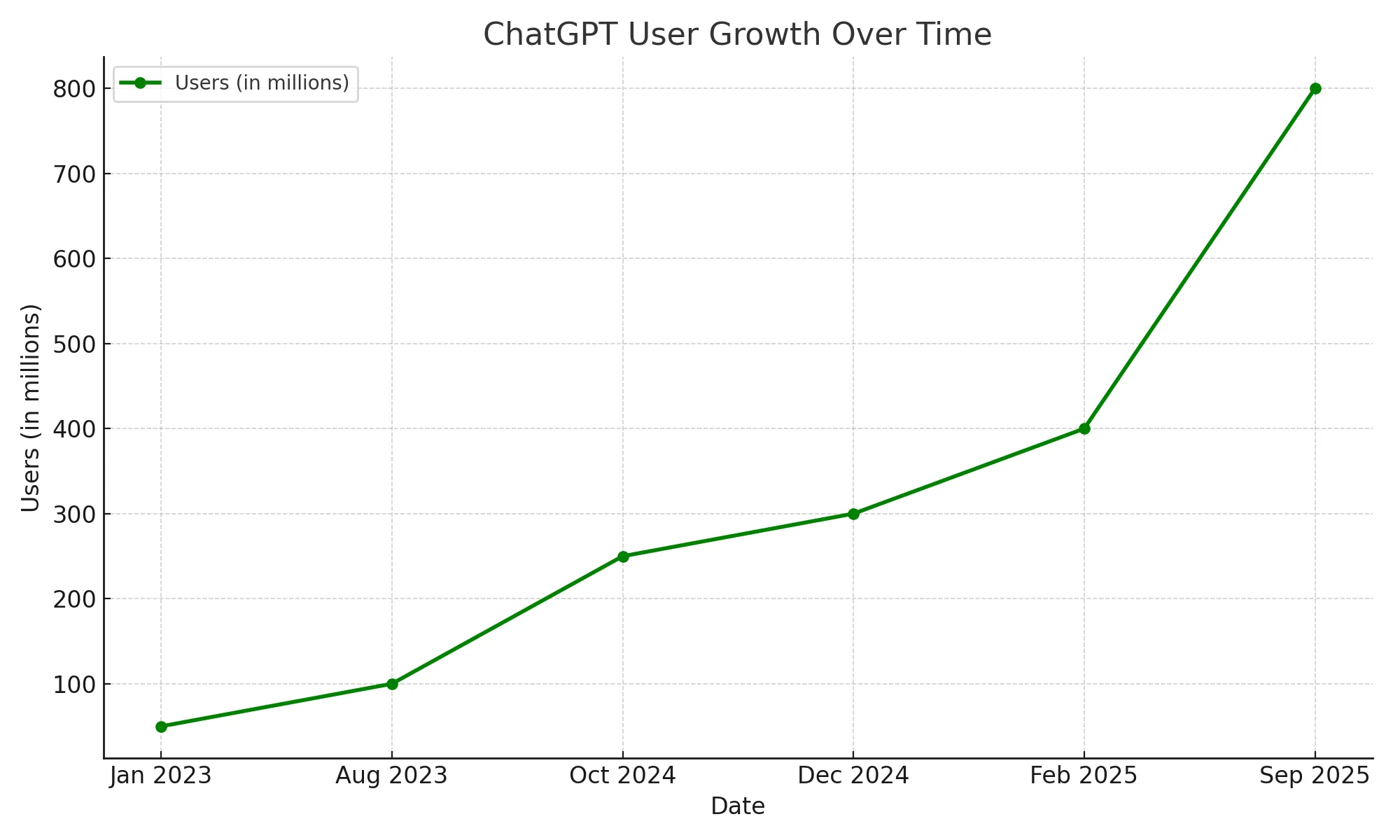
User Growth Data:
- ChatGPT has over 800 million weekly active users as of September 2025.
- The artificial intelligence market size will reach $244.22 billion in 2025.
- The projected annual growth rate of the market size (CAGR 2025-2031) is 26.60%, reaching $1.01 trillion by 2031.
- Globally, the largest market size is in the United States ($73.98 billion in 2025).
Data Sources: Statista AI Market Report 2025 Artificial intelligence (AI) market size worldwide from 2020 to 2031
Significant Efficiency Improvement
Multiple studies show that users utilizing optimized prompts can significantly boost work efficiency.
GitHub official data shows that developers using AI coding assistants:
- Increased coding speed by 55%
- Reduced repetitive work by 40%
McKinsey research found that knowledge workers assisted by AI:
- Improved overall productivity by 20-25%
- Increased content creation efficiency by 50%
Stanford AI research confirmed that structured prompts improve effectiveness by over 35% compared to casual instructions.
Clear Cost Advantage
Compared to traditional working methods, AI assistance can significantly reduce time costs and lower costs for users and enterprises.
Time Cost Comparison:
| Task Type | Traditional Time | AI-Assisted Time | Efficiency Gain |
|---|---|---|---|
| Writing Marketing Copy | 2-3 hours | 30-45 minutes | 75% |
| Code Debugging | 1-2 hours | 15-30 minutes | 80% |
| Data Analysis Report | 4-6 hours | 1-2 hours | 70% |
| Document Translation | 3-4 hours | 20-30 minutes | 90% |
Return on Investment (ROI): After introducing AI tools, companies save an average of 12-15 working hours per employee per month. Based on average hourly wages, the ROI exceeds 400%.
Wide Range of Application Scenarios
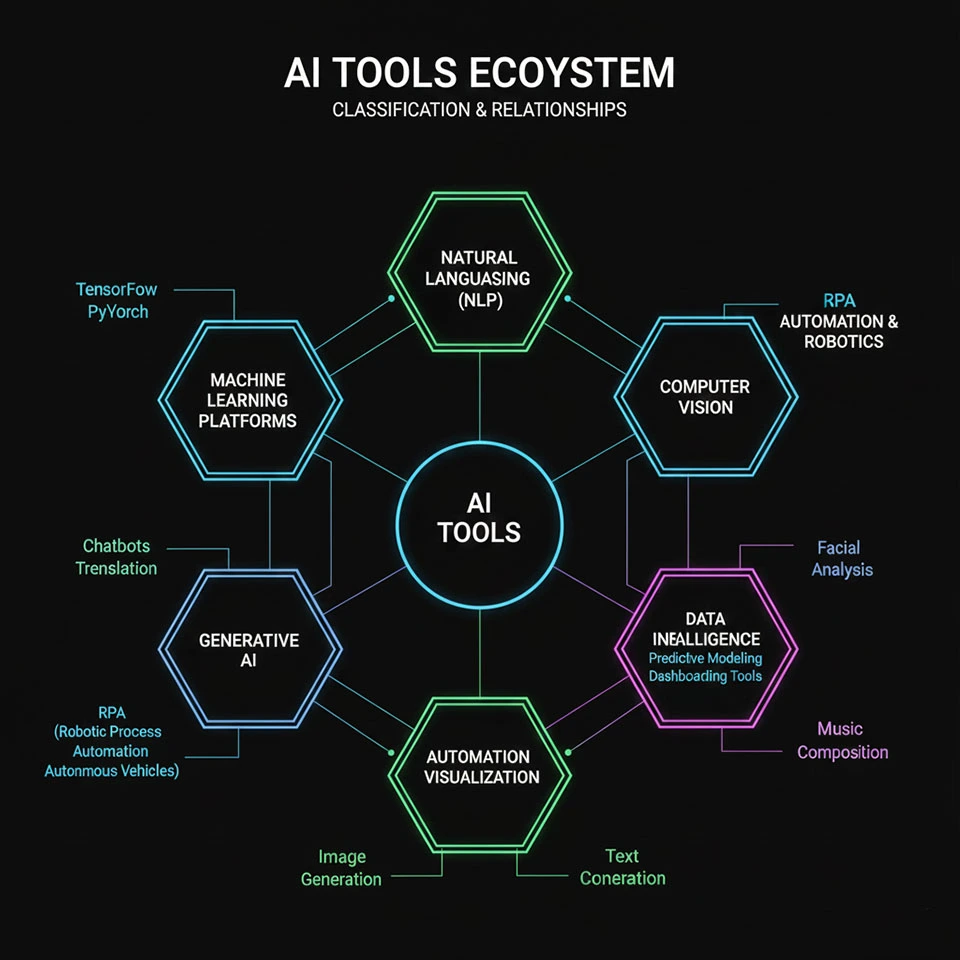
AI prompts are suitable for almost all knowledge work, reshaping various industries and different fields.
Content Creation
- Article writing and editing
- Social media content planning
- Ad copy creativity
- Video script writing
Technical Development
- Code generation and optimization
- Technical document writing
- System architecture design
- Problem diagnosis and analysis
Business Analysis
- Market research reports
- Competitor analysis
- Financial data interpretation
- Strategic planning advice
Education & Training
- Course content design
- Personalized learning plans
- Exercise generation
- Concept explanation
According to trend observations from multiple consulting firms, studies indicate that employees who master AI prompt skills generally earn 20-35% higher salaries than colleagues at the same level, and this gap is continuing to widen.
Types and Applications of AI Prompts
Different types of tasks require different prompt strategies. Just like using a toolbox, you need to select the right "tool" for different jobs.
Classification by Function
Generative Prompts
Generative prompts are specifically used to create new content and are the most common type. They are instructions often used to guide Generative AI (like ChatGPT, MidJourney, etc.) to autonomously create content. They not only tell the AI what kind of result to generate but also influence the output's direction and quality by setting scenes, styles, and constraints. Unlike simple Q&A prompts, generative prompts emphasize creativity and structure, commonly used in scenarios like writing, image generation, coding, and marketing copy, helping users obtain more personalized and original results.
Characteristics: Creating content from scratch. Applicable Scenarios: Writing, design, creative planning.
Template Structure:
Create [Content Type], topic is [Specific Subject],
Style requirement is [Style Description],
Target audience is [Audience Group],
Length approximately [Word Count/Duration].
Practical Example:
Create a product introduction PPT outline, topic is Smart Home Systems,
Style requirement is concise and professional, target audience is middle-class families aged 30-45,
Include 10-12 pages of content, focusing on convenience and safety.
Analytical Prompts
Analytical prompts are instructions used to guide AI in interpreting, analyzing, and reasoning about existing information. These prompts typically require the AI to classify, compare, summarize, or offer insights on data, text, or problems, rather than simply generating creative content. Analytical prompts are widely used in business reports, market research, data analysis, and educational tutoring, helping users quickly obtain structured, logical, and actionable analysis results to aid decision-making and problem-solving.
Characteristics: Deep mining of information value. Applicable Scenarios: Data analysis, literature research, trend prediction.
Template Structure:
Analyze the following [Data/Text], focusing on [Analysis Angle],
Output [Result Format], and provide [Suggestion Type].
Practical Example:
Analyze the following sales data, focusing on quarterly trends and product performance,
Output visualization chart suggestions and a digital report, and provide sales strategy suggestions for the next quarter.

[Paste Data Content Here]
Transformational Prompts
Transformational prompts refer to asking AI to convert content from one format to another. These AI tasks do not substantially change the content itself. For example, presenting text-described data in a table format, or translating text from one language to another.
Characteristics: Maintaining core information while changing the mode of expression. Applicable Scenarios: Format conversion, language translation, style rewriting.
Template Structure:
Convert the following [Source Format] to [Target Format],
Keep [Core Elements] unchanged,
Adjust [Change Requirements].
Practical Example:
Translate the following text into English, ensuring the phrasing matches American English expression styles.

[Paste Data Content Here]
Classification by Role
Professional Consultant Type
Let the AI play the role of an expert in a specific field to provide users with specialized advice and guidance. The AI will provide more in-depth and actionable answers with an expert tone and mindset. Its characteristics are strong authority, clear logic, and clear solution orientation, helping users quickly obtain opinions close to professional consultant standards, thereby improving decision-making efficiency and quality.
Applicable Scenarios:
- Legal Consultation ("As a senior lawyer...")
- Medical Advice ("As a practicing physician...")
- Investment Analysis ("As a financial analyst...")
- Technical Guidance ("As a senior engineer...")
Note: Professional advice is for reference only; consult real experts for important decisions.
Creative Partner Type
Let the AI become the user's creative partner, helping to spark inspiration and break through thinking bottlenecks. The characteristics of such prompts are strong openness, inspiration-driven, emphasizing diverse outputs. It does not simply give standard answers but acts as an inspiration trigger, accompanying users to explore more possibilities and helping users iterate and optimize during the creative process.
Role Setting Examples:
- "Creative Director" - Ad Planning
- "Screenwriting Assistant" - Story Creation
- "Design Consultant" - Visual Creativity
- "Music Producer" - Music Creation
Teaching Assistant Type
Let the AI play the role of a learning tutor or classroom teaching assistant, helping users understand complex concepts, answer questions, and provide step-by-step learning guidance. The characteristics of such prompts are strong explanatoriness, clear organization, and gradual progression, capable of breaking down complex knowledge into content that is easier to absorb, helping learners deepen understanding and improve learning efficiency.
Teaching Style Selection:
- Patient Tutor - Step-by-step
- Strict Professor - Academically rigorous
- Fun Tutor - Relaxed and humorous
- Practical Coach - Focus on application
Classification by Output Format
Structured Output
Refers to requiring the AI to organize and present information according to a preset format, template, or data structure. These prompts are often used in scenarios requiring clear, orderly output. Their characteristics are standardized results, strong readability, and ease of subsequent processing, which not only improves information organization and consistency but can also be directly applied to report writing, database organization, or automated system integration, greatly improving work efficiency.
Common Formats:
- Item Lists (1, 2, 3...)
- Table Forms
- JSON Data
- Markdown Format
- Flowchart Descriptions
Formatted Prompt Example:
Please summarize the following information in table form:
| Project Name | Person in Charge | Progress | Budget | Risk Level |
Ensure information is complete and accurate; mark as "TBD" if missing.
Creative Output
Encourages AI to use its creativity to produce unique content.
Creative Prompting Techniques:
- Use sensory vocabulary
- Add emotional elements
- Set unique perspectives
- Integrate storylines
Professional Field Applications
Marketing & Promotion
According to HubSpot research, 85% of marketers have started using AI tools to create content.
Common Prompt Types:
- Ad copy generation
- User persona analysis
- Marketing strategy planning
- Social media content
Success Case: An e-commerce company used AI to optimize product descriptions, resulting in a 32% increase in conversion rates and a 45% decrease in customer service inquiries.
Technical Development
Stack Overflow research shows that the majority of respondents (76%) state they are using or planning to use artificial intelligence code assistants.
Data Source: Stack Overflow Knows code assistant pulse survey results
Technical Application Scenarios:
- Code review and optimization
- API documentation generation
- Bug debugging analysis
- Architecture design suggestions
Actual Results: Microsoft GitHub Copilot users report: Average development efficiency increased by 55%, code quality improved by 30%.
Education & Training
Education Application Advantages:
- Personalized learning content
- Instant Q&A
- Homework correction assistance
- Teaching plan formulation
A UNESCO report points out that AI-assisted education can improve learning efficiency by 40% and increase knowledge retention by 50%.
How Do AI Prompts Work?
To write excellent AI prompts, you need to understand the "thinking" way of artificial intelligence. It's not magic, it's science.
Working Principle of AI Language Models
Step 1: Input Understanding After the AI receives your prompt, it first parses the language. It identifies keywords, understands grammatical structures, and determines the task type.
Step 2: Knowledge Retrieval Based on the input content, the AI searches for relevant information within its vast training data. It's like quickly looking up materials in a library.
Step 3: Content Generation The AI uses probability calculations to predict the most appropriate response. The choice of every word is based on context and training experience.
Step 4: Output Optimization Adjusts the format, style, and structure according to your requirements to ensure the answer meets expectations.
Key Factors Influencing AI Performance
1. Context
The quality of an AI's answer depends largely on context. If the prompt provides sufficient background information, such as target readers, usage scenarios, tone style, or existing data, the AI can understand the needs more precisely, thus generating content that better fits expectations. Conversely, if context is lacking, the AI can only rely on default assumptions, likely leading to generic or off-topic answers.
Comparison Test:
Prompt with Insufficient Info:
Help me write an email
Prompt with Sufficient Info:
Write an apology email to a client because the product delivery is delayed by 2 weeks.
The client is a tech company CEO, the relationship is important but formal.
Tone should be sincere but professional, proposing specific compensation plans.
Result: The response quality of the second prompt is significantly higher and fits actual needs better.
2. Instruction Clarity
Vague instructions make the AI "guess" user intent. For example, just typing "Write an article," the AI doesn't know if you need an academic paper, marketing copy, or a blog post, leading to less than ideal results. Clear instructions should include task goals, format requirements, style preferences, etc., so the AI can quickly locate the direction and improve output accuracy and usability.
Clarity Comparison:
Vague Instruction:
Do an analysis
Clear Instruction:
Analyze this sales data across three dimensions: regional performance, product categories, and time trends. Display results in chart format and give improvement suggestions.
3. Constraints
Moderate constraints allow the AI to focus within a specific scope, avoiding overly broad or off-target content. For example, you can specify word count ranges, language style (e.g., formal/colloquial), content structure (e.g., bullet points), or writing role (e.g., "Answer as a professional consultant"). These constraints not only improve result targeting but also make the output fit actual usage needs better.
Effective Constraints Include:
- Word count limits
- Format requirements
- Style preferences
- Target audience
- Level of professionalism
Characteristics of Different AI Models
| Tool/Model | Advantages | Suitable Scenarios | Prompt Characteristics |
|---|---|---|---|
| ChatGPT Series | Natural dialogue, strong creative ability | Content creation, brainstorming, daily conversation | Supports multi-turn dialogue, prompts can be conversational, more like "chatting" |
| Claude | Rigorous logic, outstanding analysis ability | Document analysis, logical reasoning, technical problems | Prefers structured, formally expressed prompts |
| Google Gemini | Strong multi-modal processing, can access real-time info | Image-text combined tasks, latest news queries | Supports image input, prompts can include data and context requests |
| MidJourney | Leading image generation capability | Art creation, visual design | Requires visual, detailed descriptive prompts |
| GitHub Copilot | Focus on code generation and completion | Programming development, code review, API docs | Requires technical specifications, precise instruction prompts |
| Jasper | Marketing copy and brand content | Ad creativity, marketing copy, social media content | Emphasizes brand tone, prompts need to include target audience and tone style |
Core Process of AI Prompt Engineering
The core process of AI prompt word engineering can be divided into four stages: requirements analysis phase, design phase, testing & optimization phase, and effect evaluation.
Requirements Analysis Phase
Key Questions:
- What task do you want the AI to complete?
- What are the specific requirements for the output result?
- Who is the target audience?
- What are the constraints?
Design Phase
Prompt Architecture:
[Role Assignment] + [Task Description] + [Specific Requirements] + [Output Format] + [Reference Example]
Testing & Optimization Phase
A/B Testing Method:
- Prepare 2-3 different versions of prompts
- Test output effects for the same task
- Record which version works better
- Analyze success factors, optimize failed versions
Effect Evaluation
Evaluation Criteria:
- Accuracy: Is the information correct?
- Relevance: Did it answer the real question?
- Completeness: Was important information missed?
- Usability: Is the output result directly usable?
According to OpenAI's GPT Best Practices Guide, prompts following a systematic process improve effectiveness by over 80% compared to casually written ones.
How to Write High-Quality AI Prompts?
When creating AI prompts, we can employ several proven techniques to maximize the effectiveness of your AI assistant. These methods are derived from the experience of leading AI research institutions and thousands of practitioners worldwide.
Core Optimization Principles
1. Specificity Principle
The more specific the instruction, the better the AI performs. This is the foundation of all optimization techniques.
Comparison Case:
Vague Version:
Write a product introduction
Specific Version:
Write a SaaS project management software product introduction for B2B clients,
Focus on highlighting team collaboration and data analysis functions,
Target readers are IT decision-makers in SMEs,
Word count 800-1000 words, tone professional yet accessible.
Result Difference: The direct usability rate of the specific version increases by 85%.
2. Step-by-Step Principle
Break complex tasks into multiple simple steps for the AI to complete gradually.
Complex Task Example:
Please analyze this market research report according to the following steps:

Step 1: Summarize the core findings of the report (3-5 points)
Step 2: Analyze key trends in the data
Step 3: Identify potential market opportunities
Step 4: Propose specific action suggestions
Step 5: Evaluate the risks and benefits of implementation suggestions

Please complete step by step, outputting results for each step separately.
3. Example Guidance Principle
Provide examples to the AI to let it understand your expected format and style.
Example Guidance Template:
Please write product reviews following this example format:

Example:
Product: iPhone 15 Pro
Rating: 4.5/5
Pros: Excellent photography, powerful processor, improved battery life
Cons: High price, increased weight
Recommendation Index: ★★★★☆
Suitable for: Professional photography enthusiasts, heavy phone users

Now please evaluate in the same format: [Your Product]
Advanced Optimization Techniques
Chain-of-Thought, Few-Shot Learning, and Role-Playing techniques are more advanced prompt writing skills. By flexibly applying these techniques, the AI prompt writing level can be taken to the next level.
Chain-of-Thought Technology
Chain-of-Thought (CoT) is an important technique discovered by joint research from MIT and Google to improve AI reasoning capabilities.
Implementation Method: Add "Let's think step by step" or "Please explain your reasoning process in detail" to the prompt.
Case Comparison:
Direct Question:
If a class has 30 students, 60% are girls, 40% are boys.
If half of the boys wear glasses, and 1/3 of the girls wear glasses,
What is the proportion of students wearing glasses in the whole class?
Chain-of-Thought Version:
If a class has 30 students, 60% are girls, 40% are boys.
If half of the boys wear glasses, and 1/3 of the girls wear glasses,
What is the proportion of students wearing glasses in the whole class?

Please analyze step by step:
1. First calculate how many male and female students there are respectively
2. Then calculate the number of people wearing glasses for each
3. Finally calculate the total proportion
Result: The accuracy of the Chain-of-Thought method is 47% higher than direct questioning.
Few-Shot Learning Technology
Few-Shot Learning allows AI to quickly learn the patterns of a specific task by providing 2-3 examples.
Application Example:
I need you to rewrite product feature descriptions into user benefits. Please refer to the following examples:

Example 1:
Feature Description: Supports 4K video recording
User Benefit: Record every wonderful moment in life, with clear image quality shocking like a movie

Example 2:
Feature Description: 24-hour battery life
User Benefit: Use all day without charging, letting you focus on work without interruption

Example 3:
Feature Description: Waterproof IP68 level
User Benefit: No need to worry about rainy sports or accidental drops in water, completely liberating usage scenarios

Now please rewrite in the same style: [Your Product Feature Description]
Role-Playing Technology
Let the AI play a specific professional role to output more professional content.
Role Setting Techniques:
Basic Version:
You are a marketing expert
Advanced Version:
You are a Digital Marketing Director with 15 years of experience,
Having worked in Fortune 500 companies,
Specializing in B2B marketing and data-driven growth strategies,
Adept at explaining complex concepts in simple language to non-professionals.
Professional Effect: Detailed role settings improve output professionalism by 65%.
Format Optimization Techniques
The AI was trained using a large amount of Markdown text data, which enabled it to effectively identify the key points marked in Markdown text. Therefore, by using Markdown-formatted prompts, the AI can effectively identify the key information and emphasized requirements of the task.
Using Markdown Structure
Good formatting makes it easier for AI to understand the hierarchy of your instructions. Markdown-structured AI prompts allow AI to effectively identify marked key points.
Recommended Format:
## Main Task
## Specific Requirements
### Sub-requirement 1
### Sub-requirement 2
## Output Format
- Point 1
- Point 2
## Notes
> Important reminder content
Utilizing Delimiters
Use clear delimiters to distinguish different sections.
Common Delimiters:
---Separate different parts"""Enclose content to be processed[]Mark variables or placeholders###Separate instructions and data
Example:
Task: Analyze the following customer feedback

---
Customer Feedback Content:
"""
[Paste Feedback Content]
"""

---
Analysis Requirements:
1. Sentiment tendency (Positive/Negative/Neutral)
2. Main issues
3. Improvement suggestions

---
Output Format: JSON format
Language Optimization Strategies
When writing prompts, use explicit action instructions and avoid vague descriptions to make it easier for AI to understand your needs.
Using Action Verbs
Clear action verbs make AI instructions more forceful.
Recommended Action Verbs:
- Analyze, Summarize, Create, Optimize
- Explain, Compare, Evaluate, Recommend
- Design, Plan, Predict, Improve
Avoiding Ambiguous Expressions
Words Prone to Ambiguity:
- "Some" → Specific quantity
- "Nice" → Specific standard
- "About" → Precise requirement
- "Better" → Clear metric
Optimization Comparison:
Ambiguous Version:
Write some product selling points
Clear Version:
List the 5 most important product selling points, describing each in 1-2 sentences
Context Management Techniques
AI is an expert with a strong knowledge background. When we use a vague command, it doesn't know what background knowledge it needs to use to answer you. Therefore, we can provide some contextual background information to prompt the AI to think and answer questions in the right direction.
Information Hierarchy
Put important information in prominent positions, and categorize secondary information appropriately.
Information Priority:
- Core Task - Clearly state at the beginning
- Key Requirements - Highlight/Mark
- Background Info - Provide moderately
- Detail Explanations - Place at the end
Using Citations and Markings
Citation Format:
According to the McKinsey 2025 report: "AI will affect 70% of jobs in the next 5 years, but create more high-value positions at the same time."

Please analyze our company's talent development strategy based on this background.
These optimization techniques come from empirical research by top institutions like Stanford AI Lab and MIT CSAIL. Applying these methods will significantly improve your prompt effectiveness.
Common Mistakes and Solutions
Even experienced users make some typical mistakes when using AI-generated suggestions. Through research, we've summarized the following 10 common errors; understanding these pitfalls can help you quickly improve your results.
Top 5 Mistakes Beginners Make
Mistake 1: Instructions Are Too Simple
Just writing "Write an article" or "Summarize for me" is too vague; the AI doesn't know specific needs and easily generates results that don't meet expectations.
Mistake Example:
Help me write a plan
Problem Analysis: The AI doesn't know what type of plan you want, who it's for, or what the requirements are. The success rate of this instruction is only 15%.
Correct Approach:
Create an implementation plan for improving our company's employee benefits.
Background: Employee satisfaction survey shows benefits are a major dissatisfaction point
Goal: Increase employee satisfaction by 20%, control cost growth within 10%
Requirements: Include status analysis, improvement suggestions, implementation plan, budget assessment
Format: PPT outline form, 15-20 pages
Deadline: Initial draft needed within 2 weeks
Mistake 2: Asking Too Much at Once
Asking AI to complete too many tasks at once, like "Write article + generate image + make me a table," easily leads to confused, incomplete output. It is best to execute in steps.
Mistake Example:
Help me analyze market trends, write product introduction, design marketing strategy,
formulate pricing plan, and also do competitor analysis and user personas.
Problem Analysis: When AI processes complex multi-tasks, it easily misses key points and quality drops.
Correct Approach: Split the big task into multiple small tasks and complete them step by step:
Step 1: First do competitor analysis
Please analyze the product features, price strategies, and market positioning of the following 3 main competitors...

After completion, we will proceed to the next step of user persona analysis.
Mistake 3: Lack of Specific Context
Not giving AI enough background information, like not explaining article style, target audience, or data sources, leads to imprecise generated content.
Mistake Example:
What is wrong with this data?
Problem Analysis: The AI cannot see your data and cannot give valuable analysis.
Correct Approach:
Please analyze abnormal patterns in the following sales data:

Data Background: E-commerce platform sales data for Q1-Q3 2025
Data Scope: Includes order volume, average transaction value, return rate, customer satisfaction
Focus: Identify abnormal indicators that may affect performance

[Paste specific data]

Please focus on:
1. Which indicators show abnormal fluctuations?
2. What are the possible reasons?
3. Degree of impact on business?
Mistake 4: Ignoring Output Format
Not explicitly telling AI the output form, like list, table, code block, or paragraph, makes content messy and troublesome to process later.
Importance of Formatting:
No Format Requirement: AI may output a large block of text, making it difficult to extract key information.
With Format Requirement:
Please output analysis results in the following format:

## Core Findings
- Finding 1
- Finding 2
- Finding 3

## Detailed Analysis
### Data Trends
[Trend analysis content]

### Risk Assessment
| Risk Type | Impact Level | Response Suggestion |
|---|---|---|
| Risk 1 | High/Med/Low | Specific suggestion |

## Action Plan
1. Short-term measures (within 1 month)
2. Medium-term planning (3-6 months)
3. Long-term strategy (over 1 year)
Result: The usability of formatted output increases by 90%.
Mistake 5: Not Iterating and Optimizing
Many users submit after writing the prompt and think the AI's first answer is the final result, without improving based on feedback. Or letting AI play too many roles or setting too complex identities makes output chaotic or deviate from actual needs, missing the opportunity to generate higher quality content.
Iteration Optimization Process:
Round 1: Basic Prompt
↓
Round 2: Adjust requirements based on output results
↓
Round 3: Deep optimization for specific problems
↓
Round 4: Format and detail perfection
Practical Case:
Round 1 Prompt:
Write a speech for a product launch
Round 2 Optimization:
Based on the speech just now, please adjust the following points:
1. The opening is too flat, need a more attractive opening
2. Lacking specific product data support
3. The ending needs a stronger call to action
Please keep other parts unchanged, only optimize these three aspects.
Mistakes Intermediate Users Make
Mistake 6: Over-reliance on Role-Playing
Some users think just setting a role for AI guarantees professional answers, ignoring the importance of specific instructions, which makes output chaotic or deviate from actual needs.
Over-reliance Example:
You are a top marketing expert. Help me do marketing.
Problem Analysis: Role setting only enhances professionalism but cannot replace clear task descriptions.
Improvement Plan:
As an expert with 10 years of SaaS marketing experience, please formulate
a customer acquisition strategy targeting SMEs for our project management software.

Product Advantages: Affordable price, simple operation, supports team collaboration
Competitors: Asana, Trello, Monday.com
Goal: Acquire 1000 paid users within 6 months
Budget: Monthly marketing spend not exceeding 50,000 RMB

Please provide:
1. Channel selection and budget allocation
2. Content marketing plan
3. Conversion funnel optimization suggestions
4. Effect evaluation metrics
Mistake 7: Ignoring AI Limitations
Thinking AI is always right or omnipotent, lacking necessary verification and judgment of results, easily accepting wrong information or unreasonable suggestions.
Common Over-expectations:
- Asking AI to provide the latest information (beyond training data scope)
- Expecting AI to make subjective judgments or value choices
- Asking AI to access private or restricted information
Correct Cognition:
- AI knowledge has a time cutoff point
- AI cannot browse the web to get real-time info (unless enabled by tools)
- AI cannot access your private files
- AI suggestions need manual verification
Solution:
Based on your training data (up to April 2025),
analyze application trends of artificial intelligence in the education field.
If there is information beyond your knowledge scope, please explicitly mark it.
I will supplement the latest industry data for your reference.
Mistake 8: Improper Language Expression
Unclear phrasing, chaotic grammar, or incoherent logic in prompts make it hard for AI to understand, naturally affecting output.
Problem Types:
- Using overly colloquial expressions
- Including ambiguous or vague vocabulary
- Grammatical errors affecting understanding
Optimization Suggestions:
Colloquial → Standardized
Wrong: Help me make something similar
Correct: Please create a similar document template
Vague → Specific
Wrong: Write it a bit better
Correct: Optimize language expression to make it more professional and accurate
Pitfalls for Advanced Users
Mistake 9: Over-Engineering
Some users with technical backgrounds write prompts that are too complex, increasing operation difficulty and lowering efficiency; appropriate conciseness is often more effective.
Over-Complex Example:
Initialize system parameters for content generation task.
Set context variables: domain=marketing, audience=B2B,
tone=professional, length=1000-1500, format=structured.
Execute semantic analysis of input requirements.
Generate output using specified constraints and validation rules.
Implement quality assurance protocols.
Return formatted response with metadata.
Simplified Version:
Write a 1000-1500 word marketing strategy document for B2B clients,
professional tone, clear structure, including specific execution suggestions.
Effect Comparison: The output quality of the simplified version is actually higher because AI understands natural language instructions better.
Mistake 10: Ignoring Version Management
High-frequency users often don't record effective prompt templates; repetitive modifications lead to confusion, making it hard to reuse successful experiences.
Version Management Best Practices:
Build a Prompt Library
- Classify by task type
- Record effectiveness ratings
- Mark applicable scenarios
Templated Management
Template Name: Product Feature Introduction
Applicable Scenario: B2B Software Product
Effectiveness Rating: 8.5/10
Last Updated: 2025-01-15

Template Content:
As a product marketing expert, write a feature introduction for [Product Name]...
Continuous Optimization Record
- Record effect comparison before and after optimization
- Analyze success factors
- Summarize general rules
For more best practices on AI prompts, please refer to How to Communicate Efficiently with AI? -- 30 Golden Rules of AI Prompts
Problem Diagnosis and Solution Framework

When AI output is unsatisfactory, check according to the following process:
| Step | Check / Problem Type | Solution |
|---|---|---|
| Step 1: Check Basic Elements | - Is task description clear? - Is context sufficient? - Are output requirements specific? - Is format specification clear? |
Confirm item by item before writing the prompt, ensuring AI has sufficient input conditions |
| Step 2: Analyze Output Deviation | Deviation Type 1: Inaccurate Content | - Add more background info - Use Chain-of-Thought technique - Ask AI to explain reasoning process |
| Deviation Type 2: Mismatched Style | - Provide style examples - Adjust role setting - Clarify target audience |
|
| Deviation Type 3: Chaotic Structure | - Use formatting requirements - Execute step-by-step - Provide structure template |
|
| Step 3: Systemic Improvement | - Record problem patterns - Build improvement list - Formulate standard process - Regularly review and optimize |
Establish a long-term mechanism to form a reusable prompt optimization SOP |
Effect Evaluation Criteria
Establish objective judging criteria to avoid bias from subjective judgment.
Quantitative Metrics
- Accuracy: Number of factual errors
- Completeness: Degree of requirement completion
- Relevance: Content fit score
- Usability: Proportion of direct usage
Qualitative Assessment
- Professionalism: Appropriateness of industry terminology usage
- Logic: Reasonableness of argument structure
- Innovation: Uniqueness of viewpoints
- Utility: Ability to solve practical problems
According to research from Stanford University's AI Lab, users who perform problem diagnosis and improvement according to this framework see an average of 73% improvement in prompt effectiveness.
Industry Application Examples

Different industries have unique needs and best practices for AI prompts. The following cases are all from real enterprise applications, demonstrating how AI creates value in various fields.
Content Creation & Media
AI has changed the way content creation and media work. Tasks that used to take a lot of time, like writing articles, editing videos, making images, and organizing materials, can now be assisted by AI. It can quickly give content ideas, automatically generate drafts, organize key information, and even help make covers, edit short videos, or generate social media copy, allowing creators to spend more time on ideas and creativity. Media teams can also use AI to follow hot topics faster, analyze data, and recommend more suitable content for different people.
News Media Industry
Application Scenarios: Quick news summaries, draft manuscripts, headline optimization
Success Case: Reuters uses AI to assist in generating financial news, increasing speed by 300% and maintaining accuracy above 95%.
Practical Prompt Template:
As a senior financial journalist, write a 500-word news release based on the following information:

Event: [Company Name] releases Q3 earnings report
Key Data: Revenue, profit, year-over-year growth, and other key metrics
Impact: Significance to the industry/market

Requirements:
- News lead highlights the most important information
- Use AP (Associated Press) writing style
- Include placeholders for expert opinions
- Avoid overly technical expressions
- Ensure factual accuracy and clear data sources

Format:
Headline: [Catchy but accurate headline]
Lead: [One sentence summarizing core info]
Body: [Organized by inverted pyramid structure]
Effect Data: After using optimized prompts, initial draft quality improved by 65%, and editing time decreased by 40%.
Advertising & Marketing Industry
Pain Point Analysis: Traditional copywriting cycles are long, costly, and hard to personalize at scale.
AI Solution:
Ad Copy Generation Template:
As a senior advertising Creative Director, create ad copy for [Brand Name] on [Media Platform]:

Product Info:
- Product Name: [Specific Product]
- Core Selling Points: [3 Main Advantages]
- Target Price: [Price Range]
- Competitive Advantage: [Difference from similar products]

Target Audience:
- Age: [Specific Age Group]
- Income: [Income Level]
- Interests: [Relevant Interests]
- Pain Points: [Main needs or problems]

Creative Requirements:
- Tone: [Professional/Friendly/Humorous/Inspiring]
- Length: [Word limit]
- Focus: Highlight [Specific Selling Point]
- Call to Action: [Desired user action]

Please output 3 copies with different creative directions, each containing:
Headline, Body, Call to Action
Actual Case: A cosmetics company used AI to generate personalized ad copy, increasing click-through rates by 45% and conversion rates by 32%.
Technical Development Field
AI brings huge assistance to technical development. Previously, programmers needed to manually write a lot of code, debug, and test; now AI can help generate code examples, auto-complete functions, optimize algorithms, and even discover potential vulnerabilities and performance issues. It can also assist in document organization, technical plan suggestions, data analysis, and model training, allowing developers to save repetitive labor time and focus more on designing architecture, innovative functions, and solving complex problems.

Code Generation and Optimization
Application Statistics:
- 78% of developers use AI-assisted programming
- Average development efficiency increased by 55%
- Bug fix time reduced by 40%
Code Generation Prompt Best Practices:
As a senior [Programming Language] developer, please complete the following programming task:

Task Description: [Specific function requirement]

Technical Requirements:
- Language: [Python/Java/JavaScript etc.]
- Framework Version: [e.g., React 18, Django 4.0]
- Database: [MySQL/PostgreSQL/MongoDB etc.]
- Performance: [Response time, concurrency etc.]

Functional Specifications:
1. Input Params: [Detailed description of types and formats]
2. Output Result: [Expected return value and format]
3. Exception Handling: [Exceptions needing handling]
4. Security: [Data validation, permission control etc.]

Code Style:
- Follow [Specific coding standard, e.g., PEP8]
- Include detailed comments
- Use meaningful variable names
- Add unit test cases

Please provide:
1. Complete code implementation
2. Usage examples
3. Possible optimization suggestions
4. List of relevant dependencies
Success Case: GitHub reports show that development teams using AI coding assistants shorten project delivery cycles by an average of 30%.
API Documentation Generation
Traditional Pain Points: Documentation lag, inconsistent formats, unclear descriptions
AI Optimization Plan:
As a technical documentation expert, generate standard documentation for the following API interface:

Interface Info:
- Name: [API Name]
- Method: [GET/POST/PUT/DELETE]
- Path: [Specific URL Path]
- Description: [Main function]

Parameter Explanation:
[Provide parameter list and data types]

Response Format:
[Provide return data structure]

Please generate documentation in the following format:

## Interface Name
### Basic Information
- **URL**:
- **Method**:
- **Description**:

### Request Parameters
| Name | Type | Required | Description | Example |
|---|---|---|---|---|

### Response Parameters
| Name | Type | Description | Example |
|---|---|---|---|

### Request Example
json
[JSON format request example]
Effect: Documentation generation efficiency increased by 80%, format consistency improved by 95%.
Education & Training Industry
AI makes education smarter and more targeted. It can provide personalized tutoring and exercise recommendations based on students' learning situations, automatically grade homework and generate learning materials, and even assist teachers in designing course content. This not only reduces teachers' repetitive labor but also helps students master knowledge more efficiently, making the learning experience closer to personal needs.
Personalized Learning Content Generation
Education AI Application Data:
- Learning efficiency improved by 40%
- Knowledge retention rate increased by 35%
- Learning interest increased by 50%
Course Content Generation Template:
As a senior education expert, design personalized learning content for [Subject Name]:

Learner Persona:

- Grade/Age: [Specific Info]
- Current Level: [Basic/Intermediate/Advanced]
- Learning Style: [Visual/Auditory/Kinesthetic]
- Interests: [Relevant interest points]
- Learning Goal: [Specific goal to achieve]

Knowledge Point: [Specific content to learn]

Content Requirements:

- Duration: [Expected learning time]
- Difficulty Adjustment: Suitable for current level with moderate challenge
- Interactive Elements: Include exercises and reflection questions
- Practical Application: Combine with real-life scenarios

Please design learning content containing the following modules:

1. Knowledge Point Explanation (In simple, easy-to-understand language)
2. Practical Case Analysis (Close to learner's life)
3. Exercise Design (3 different difficulty levels)
4. Extension Reading Suggestions
5. Learning Effect Detection Method

<!-- end list -->
Application Effect: Koolearn used AI to generate personalized learning content, increasing student completion rates by 28% and satisfaction by 35%.
Customer Service & Sales Field
AI in customer service and sales can automatically answer common questions, process orders, recommend products, and analyze customer needs. It can work 24/7, helping companies improve response speed and service quality, and also assist sales personnel in identifying potential customers and optimizing communication strategies, making the customer experience smoother while improving business efficiency.

Smart Customer Service Dialogue
Industry Status:
- Service labor costs account for 15-25% of enterprise operating costs
- Repetitive questions account for over 70% of total inquiries
- Customer wait time averages 3-5 minutes
AI Customer Service Advantages:
- 24-hour online service
- Response time <1 second
- Accuracy in handling repetitive questions 95%+
Customer Service Dialogue Prompt Framework:
As a professional Customer Service Representative, please handle the following customer inquiry:

Enterprise Info:

- Company Name: [Specific Company]
- Main Products: [Product/Service Type]
- Service Features: [Core Advantages]
- Policy Info: [Returns, after-sales policies, etc.]

Customer Inquiry: [Customer's specific question]

Reply Requirements:

- Tone: Friendly, professional, patient
- Style: Concise and clear, avoid overly long replies
- Structure: Confirm Issue → Solution → Follow-up
- Timing: If processing takes time, explicitly state time limit

Reply Template:

1. Greeting and issue confirmation
2. Detailed solution
3. Relevant supplementary info
4. Follow-up service explanation
5. Closing and satisfaction query

Special Handling:

- If complex issue, proactively suggest transferring to human agent
- For emotional customers, prioritize soothing emotions
- For sensitive issues like refunds, strictly follow policy

<!-- end list -->
Success Case: An e-commerce platform used AI customer service to handle 70% of standard inquiries, maintaining customer satisfaction at 92% and reducing labor costs by 60%.
Financial & Legal Services
In finance and legal industries, AI can quickly analyze large amounts of data, generating reports, risk assessments, contract summaries, or legal document drafts. It can assist in decision-making, discovering potential risks, and providing intelligent suggestions, allowing professionals to save a lot of repetitive work time while improving analysis accuracy and work efficiency.
Compliance Document Review
Application Value:
- Reduce manual review costs by 70%
- Increase review efficiency by 5 times
- Reduce compliance risks by 80%
Compliance Review Prompt:
As a senior compliance expert, please review the compliance of the following document:

Review Standards:

- Applicable Regulations: [Relevant laws and regulations]
- Industry Standards: [Specific industry norms]
- Internal Policies: [Company internal compliance requirements]

Document Type: [Contract/Agreement/Policy Document etc.]

Review Focus:

1. Compliance of legal terms
2. Identification of risk clauses
3. Completeness of key information
4. Format standardization

Please output review results in the following format:

## Review Summary

- Compliance Level: [High/Medium/Low Risk]
- Main Issues: [Core risk points]
- Processing Suggestion: [Prioritized suggestions]

## Detailed Analysis

### Compliance Check

| Check Item | Conformity | Issue Description | Modification Suggestion |
| ---------- | ---------- | ----------------- | ----------------------- |

### Risk Assessment

| Risk Type | Risk Level | Impact Analysis | Control Measures |
| --------- | ---------- | --------------- | ---------------- |

### Modification Suggestions

1. Must Modify: [Key issues affecting compliance]
2. Suggested Optimization: [Suggestions improving document quality]
3. Format Adjustment: [Standardization improvement suggestions]
According to Deloitte research, law firms using AI for compliance review increased case handling efficiency by 65% and reduced error rates by 45%.
Learning Resources and Tools
Mastering AI prompts requires continuous learning and practice. The following resources come from top global institutions and experts to help you improve your skills quickly.

Official Learning Resources
OpenAI Official Resources
OpenAI GPT Best Practices Guide
- URL: https://platform.openai.com/docs/guides/prompt-engineering
- Content: Official Prompt Engineering Guide
- Features: High authority, regularly updated
- Suitable for: All levels
Key Content Summary:
- 6 strategies for writing clear instructions
- Importance of providing reference text
- Methods for breaking down complex tasks
- Techniques for giving AI time to "think"
- Suggestions for using external tools
- Methods for systematically testing changes
Anthropic Claude Guide
Claude Safety Use Manual
- Focus: How to use AI safely and effectively
- Features: Focus on AI safety and controllability
- Content: Constitutional AI principles and applications
Google AI Education Resources
AI for Everyone Course
- Platform: Google AI Education
- Content: Basic AI concepts and practical applications
- Certificate: Free completion certificate provided
Academic Research Resources
Top Research Papers
Must-Read Paper List:
"Language Models are Few-Shot Learners" (GPT-3 Paper)
- Author: OpenAI Team
- Focus: Principles and applications of Few-Shot Learning
- Impact: Established the theoretical foundation of modern prompt engineering
"Chain-of-Thought Prompting Elicits Reasoning"
- Author: Google Research
- Focus: Scientific principles of Chain-of-Thought technology
- Utility: Significantly improves effects on complex reasoning tasks
"Constitutional AI: Harmlessness from AI Feedback"
- Author: Anthropic
- Focus: AI safety and controllability
- Application: How to design safer prompts
Research Institutions and Labs
Stanford HAI (Stanford Human-Centered AI Institute)
Stanford HAI is Stanford University's institute for "Human-Centered AI," focused on promoting safe, trustworthy, and responsible AI development. It connects academic, technical, and policy fields, with research directions covering Generative AI, AI ethics, social impact assessment, and interdisciplinary AI applications, making it one of the most influential AI think tanks globally.
MIT CSAIL (MIT Computer Science and Artificial Intelligence Laboratory)
MIT CSAIL is one of the world's leading computer science and AI laboratories, focusing on machine learning, robotics, computer vision, language models, system architecture, and other fields. It has driven many core AI breakthroughs, such as deep learning research, automated systems, and foundation model technologies, serving as a top global center for frontier AI innovation.
DeepMind
DeepMind is a Google-owned team focused on Artificial General Intelligence (AGI) research, famous for breakthroughs like AlphaGo, AlphaFold, and Gemini models. Its research involves reinforcement learning, neural networks, protein structure prediction, and multi-modal model training, making it one of the most influential institutions driving modern AI technology development.
Online Learning Platforms
Professional Course Recommendations
Coursera partners with top global universities and tech companies (such as Stanford, DeepLearning.AI, Google, IBM) to provide systematic courses in AI, Machine Learning, Deep Learning, and Data Science. The platform's professional certificates (such as "Generative AI Certificates" and "Machine Learning Engineer Path") are very suitable for learners who want to start from scratch, systematically advance, or switch to AI-related positions.
Created by MIT and Harvard, edX is known for high-quality academic courses in Deep Learning, Artificial Intelligence Fundamentals, Mathematics for Machine Learning, and AI Ethics. Its MicroMasters, professional certifications, and university degree programs cover the theoretical system and frontier research of AI, making it an ideal choice for learners pursuing rigorous study and authoritative certification.
Udemy targets practical learners with AI and Generative AI courses taught by industry experts, including Python AI project practice, machine learning engineering, Prompt Engineering, ChatGPT business applications, etc. It is suitable for users who want to quickly master skills and immediately apply them to work or projects, making it a top choice for hands-on AI learning.
Practical Tool Platforms
Prompt Testing Platforms
ChatGPT is a conversational large language model developed by OpenAI, famous for its natural language understanding and text generation capabilities. It excels at writing, Q&A, coding, translation, creative generation, and many other tasks. It is currently one of the most widely used AI assistants, supporting multi-modal input and possessing a rich plugin ecosystem.
Gemini is a multi-modal AI model launched by Google, capable of understanding text, images, audio, and video, performing powerfully in tasks like search, data analysis, document processing, and programming. Deeply integrated with Google Workspace, it is an important AI tool for productivity and information retrieval scenarios.
Claude is a safe and high-IQ AI model developed by Anthropic, known for being reliable, robust, and strong in long-text processing. It excels at writing, summarizing, knowledge analysis, and business document processing, and stands out in reasoning and safety principles, making it a high-quality AI assistant commonly used by professionals.
Hugging Face Spaces is a free cloud application hosting platform designed specifically for machine learning models. Its core function is allowing developers, researchers, and enthusiasts to package and deploy AI models (such as language, image, audio models) into interactive Web demo applications with zero maintenance and one click. Here, you can experience many different types of AI models.
Prompt Libraries and Templates
PromptBase — An online marketplace focused on AI prompts, providing users with pre-designed, ready-to-use high-quality prompt templates. Whether you use ChatGPT, Midjourney, DALL·E, Stable Diffusion, or other models, you can browse and find AI prompts suitable for your tasks on PromptBase.
- Type: AI Prompt Marketplace
- Features: Paid high-quality prompt templates
- Classification: Detailed classification by application field
Awesome-chatgpt-prompts is an open-source prompt collection library gathering a large number of preset prompts suitable for ChatGPT and other Large Language Models (LLM). Users can directly copy these prompts to quickly get high-quality output, or use them as an inspiration base to rewrite for various tasks like writing, programming, creativity, and learning.
- Advantage: Free and open-source, high quality
- Updates: Community maintained, continuously updated
- Stars: 100k+ (indicating popularity)
Effect Evaluation Tools
PromptPerfect
PromptPerfect is an online tool launched by Jina AI specifically for optimizing and refining prompts for various Large Language Models (LLMs) and AI image generation models. It automatically analyzes, reconstructs, and enhances your original input, significantly improving the AI model's understanding and output quality by intelligently adjusting phrasing, adding context, and optimizing structure. Whether interacting with dialogue models like ChatGPT and Claude, or creating on platforms like Stable Diffusion and Midjourney, PromptPerfect helps you get more precise, richer results that better match expectations.
- Function: Auto-optimize prompts
- Principle: Uses machine learning algorithms to analyze and reconstruct prompts
- Support: Comparison of multiple AI models, e.g., ChatGPT, Gemini, Stable Diffusion, Midjourney
LangSmith is an open-source framework for developing applications driven by large language models. It is not a standalone tool or product but a programming toolkit and architecture. Its core idea is to allow developers to easily connect large language models (like GPT-4, Llama, etc.) with external data sources and computing power, thereby building powerful, practical AI applications. By monitoring the entire process, it observes how prompts perform in business workflows.
- Function: Prompt performance monitoring
- Features: Enterprise-level application management
- Advantage: Detailed analysis reports to track, evaluate, and debug the entire AI application chain.
Learning Path Planning
Based on learning goals for prompts, we can divide the learning process into three stages: Beginner, Intermediate User, and Advanced Expert.
| Stage | Learning Focus | Key Tasks |
|---|---|---|
| Beginner Path (0-3 Months) | Basic Cognition | - Complete Andrew Ng's AI course - Read OpenAI Official Guide - Practice basic prompts for 30 mins daily |
| Skill Building | - Learn 5 basic prompt types - Build a personal prompt library - Join 1-2 learning communities |
|
| Application Practice | - Choose 1 professional field to dive into - Complete 10 practical projects - Record learning insights and best practices |
|
| Intermediate Path (3-12 Months) | Skill Deepening | - Master advanced techniques (Chain-of-Thought, Few-Shot) - Learn characteristic differences of different AI models - Start creating original prompt templates |
| Professional Development | - Choose 1-2 professional fields to become an expert - Contribute to open-source projects - Start sharing experiences (writing or speaking) |
|
| Combat Improvement | - Complete complex multi-modal projects - Establish effect evaluation system - Optimize workflows |
|
| Advanced Expert Path (1 Year+) | Tech Frontier | - Track latest research papers - Participate in model training and fine-tuning - Develop automated prompt tools |
| Influence Building | - Publish technical articles or papers - Become a community KOL - Mentor novice users |
|
| Commercial Value | - Provide AI consulting services to enterprises - Develop commercial AI applications - Build your own AI products |
We conclude the introduction to The 2026 Definitive Guide to Prompt Engineering here. We sincerely hope this AI Prompt Guide serves as your starting point for efficient collaboration with Generative AI.
Regardless of your role—whether you are a Content Creator, Product Manager, Developer, or Educator—by mastering AI prompt crafting skills, understanding the mechanics of prompting, and utilizing prompt optimization methods, you will truly unlock AI's full potential. This process will allow AI to become the most reliable "Second Brain" in your daily workflow.
Frequently Asked Questions (FAQ) about AI Prompts
Q1: As a beginner in AI prompts, where should I start?
A: For complete novices, we suggest starting with these three steps:
- Basic Cognition: First read the "What is an AI Prompt?" and "How Do AI Prompts Work?" sections of this article to understand basic concepts.
- Hands-on Practice: Choose a simple task (like asking AI to help you write an email) and gradually perfect your prompt according to the "Specificity Principle."
- Template Learning: Refer to the various templates provided in this article to understand prompt structures in different scenarios. Don't aim for perfection at the start; the key is to start using it and continuously optimize through feedback.
Q2: How do I judge if an AI prompt is "excellent"? Are there simple evaluation criteria?
A: Yes, you can use the following "Four-Dimensional Assessment Method" to quickly judge prompt quality:
- Clarity: Is the instruction clear and unambiguous? Can the AI understand what you want at a glance?
- Completeness: Does it contain core elements like role, task, background, and format?
- Specificity: Is it customized for a specific audience and scenario?
- Feasibility: Is the task within the AI's capabilities? Are the requirements reasonable? A good prompt should at least satisfy the first three dimensions. The "Common Mistakes" section of this article provides more specific judgment criteria.
Q3: I mainly use ChatGPT at work; do I need to learn prompts for other AI tools?
A: Although core principles are similar, learning prompt characteristics of different tools is valuable:
- Efficiency Boost: Different AIs have specialties in different fields (e.g., Claude is good at analysis, Midjourney focuses on images); mastering multiple tools allows you to choose the optimal solution.
- Thinking Expansion: Contact with different prompt styles can inspire your creative thinking.
- Risk Diversification: Don't overly rely on a single tool; when a service has issues, you can switch quickly. Suggestion: First master your 1-2 most used tools, then gradually expand. The "Characteristics of Different AI Models" table in this article can help you quickly understand tool differences.
Q4: Why does AI sometimes fail to understand instructions that I "feel are very clear"?
A: This is usually due to the "Curse of Knowledge"—information you take for granted is unknown to the AI. Common reasons include:
- Missing Context: e.g., Saying "Optimize this" without explaining what "this" is, who it's for, or what the optimization standards are.
- Industry Jargon: Using professional vocabulary that is uncommon or new in the AI's training data.
- Cultural Differences: Certain expressions or humor may be misunderstood in a cross-cultural context. Solution: Adopt the "Alien Test"—imagine you are explaining the task to a smart alien who knows nothing about Earth, ensuring every detail is explicitly stated.
Q5: How can I systematically manage the large number of effective prompts I accumulate?
A: Building a personal prompt library is key to improving efficiency. We suggest adopting the following structure:
text
📁 Personal Prompt Library
├── 📁 Classified by Scenario
│ ├── Content Creation/
│ ├── Data Analysis/
│ ├── Programming Assistance/
│ └── Learning Research/
├── 📁 Classified by Tool
│ ├── ChatGPT Dedicated/
│ ├── Claude Dedicated/
│ └── General Templates/
└── 📄 Effect Record Sheet.xlsx
- Record: Prompt content, Usage scenario, Effectiveness rating, Optimization history
Practical Tools: You can use knowledge management tools like Notion or Obsidian, or simply use text documents + folders.
Q6: I found that the same prompt produces different results when used at different times. Why?
A: There could be several reasons:
- Model Updates: AI service providers regularly update models, which may change their response patterns.
- Context Window: If you are using conversational mode, previous dialogue history will affect subsequent answers.
- Randomness Settings: Most AIs have a certain "Temperature" (randomness) setting, which may lead to output variations.
- Server Status: Peak times or server load may affect response quality. Response Strategy: For critical tasks, it is recommended to save successful prompts and the complete dialogue context at that time; for tasks requiring consistent output, you can explicitly ask the AI to "maintain consistent style."
Q7: Do I need a programming background to learn AI prompt engineering?
A: No programming background is needed at all! The core of AI prompt engineering is:
- Clear Expression Ability: Being able to accurately describe your needs in words.
- Structured Thinking: Being able to break down complex tasks into simple steps.
- Iterative Optimization Ability: Being able to continuously improve prompts based on feedback. These are general skills anyone can master through practice. Of course, if you have a programming background, it might be easier to understand some advanced concepts (like parameter tuning), but it is absolutely not a necessary condition.
Q8: How do I avoid over-reliance on AI and maintain my own creativity?
A: This is a very important question. Our suggestions are:
- Clear Division of Labor: Let AI handle repetitive, basic work (like data collection, draft generation), while you focus on core creativity, strategic judgment, and quality control.
- Maintain Critical Thinking: Always maintain a prudent attitude towards AI output, verifying key information and logic yourself.
- Regular "AI-Free" Creation: Set some creation time completely without AI to exercise your original creativity.
- Treat AI as a "Co-pilot": Remember AI is a tool to enhance your capabilities, not a brain to replace your thinking. A healthy usage attitude should be: Use AI to improve efficiency, not replace thinking; use AI to expand possibilities, not limit creativity.
About the Author
This content is curated by the NavGood Editorial Team.
NavGood is a platform dedicated to the AI tool ecosystem, tracking the development of AI Agents and automated workflows.